


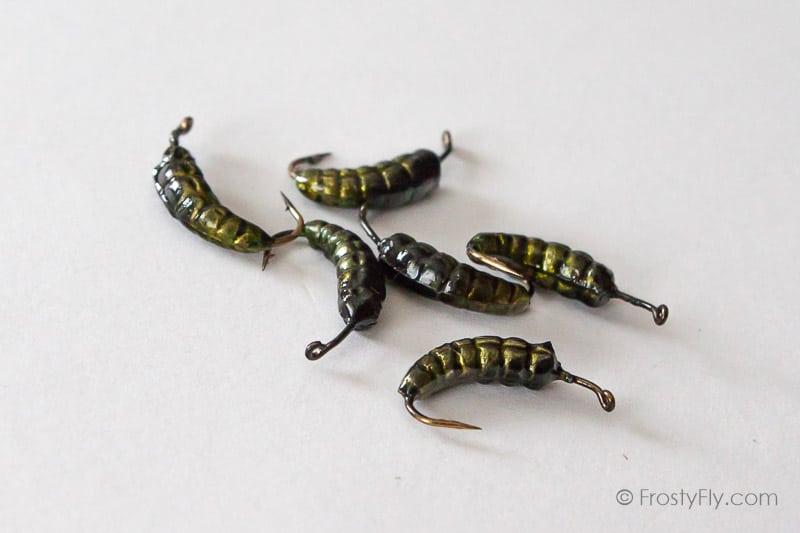
Weighted Caddis Larva Bodies with Hooks
Tie realistic, fast-sinking caddis larva patterns with less time at the vise.
Weighted Caddis Larva Bodies with Hooks combine a segmented, lifelike caddis larva body with a high-quality hook, giving you a ready-made foundation for tying effective caddis nymph patterns. Simply add your preferred dubbing, legs, or finishing materials to complete a realistic fly in just a few simple steps.
Each body is molded from lead directly onto the hook, creating the weight needed to get the fly down quickly and keep it in the trout's feeding zone. The realistic segmentation, authentic colors, and protective clear lacquer finish give the body a natural appearance while providing durability for repeated use.
Whether you're tying simple caddis larvae or more detailed nymph patterns, these ready-made bodies make the process faster, more consistent, and highly effective on the water.
Each pack contains 6 weighted bodies with hooks.
Available in four proven colors: Light Green, Brown, Green, and Smokey, and four hook sizes/weights:
- #10 – 1.0 g
- #12 – 0.7 g
- #14 – 0.3 g
- #16 – 0.1 g
Warning: This product contains lead. Wash your hands after handling.
Caddis Larva Fly Fishing
Caddisflies are aquatic insects that undergo a complete metamorphosis, progressing from egg to larva, then pupa, before emerging as adults. Most species complete this life cycle within a year. Of all these stages, the larval stage is the longest, lasting from a few weeks to several months.
Many caddis larvae build protective cases using silk produced by their salivary glands together with small stones, sand, twigs, or other streambed materials. There are three main types of caddis larvae: net-making, case-making, and free-living. Free-living caddis are especially important to fly anglers because they spend much of their lives exposed on the riverbed before building a case to pupate, making them a regular and vulnerable food source for trout.
Caddis larvae are commonly found in riffles and well-defined currents, where they crawl along the bottom using their front legs and posterior hooks. They cannot swim, so your presentation should imitate this natural behavior by keeping the fly drifting close to the streambed.
Most natural caddis larvae range from hook size #16 to #8, with #10, #12, and #14 being the most common sizes for fly patterns.
The most effective way to fish caddis larva patterns is with a drag-free dead drift, keeping the fly close to the bottom where the naturals live. Whether fishing under an indicator or using a Euro nymphing setup, maintaining good contact with the fly is important, as takes are often subtle and easy to miss. A strike indicator can be especially helpful when fishing deeper runs or faster currents.