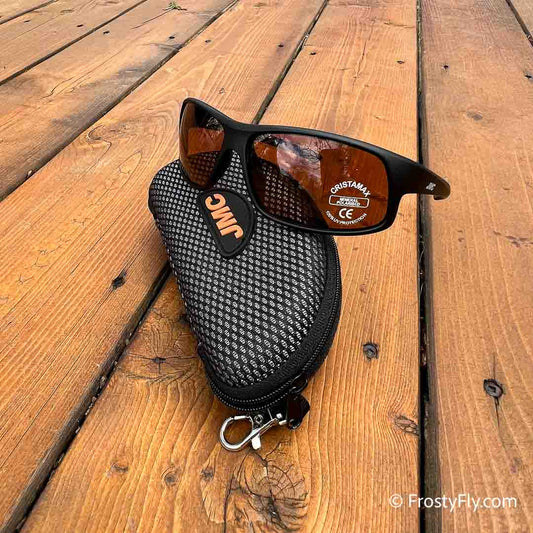
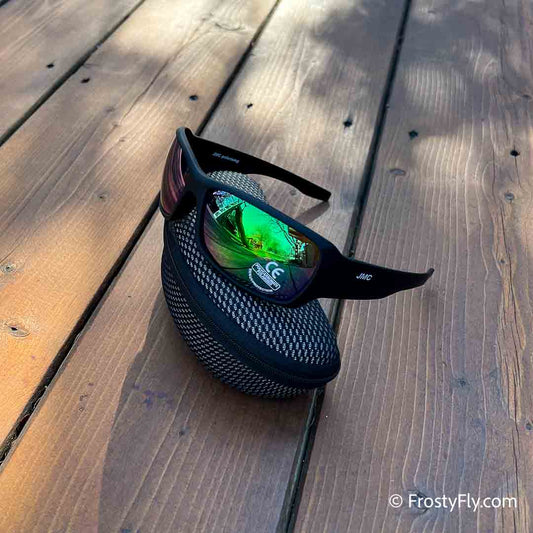
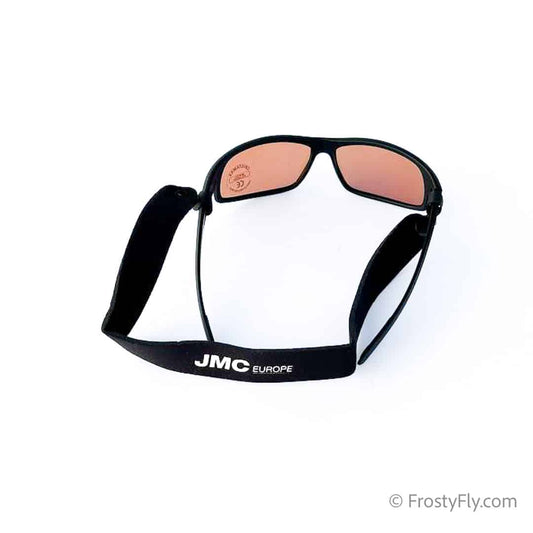
Fishing sunglasses are indispensable for any angler who spends time on the water. They protect your eyes from harmful UV rays and reduce surface glare, but their real advantage lies in what they reveal below the surface. By cutting reflected light, polarized lenses allow you to see into the water more clearly, making it easier to spot fish, structure, and subtle current seams.
When choosing fishing sunglasses, a few key features matter most. Polarized lenses are essential for reducing glare and improving clarity, while full UV protection helps protect your eyes during long days in bright conditions. Durable frames and scratch-resistant lenses are equally important, ensuring your sunglasses hold up to frequent use, travel, and the realities of fishing outdoors.
With the right pair of fishing sunglasses, you’re not just protecting your eyes—you’re improving your awareness on the water and giving yourself a real advantage when conditions are challenging.
How to Choose the Right Lens Color
Lens color plays a major role in how well you see through the water. Different conditions call for different tints, and choosing the right one can noticeably improve visibility.
On overcast days or in low-light conditions, yellow, green, or amber lenses enhance contrast and brightness, making it easier to pick up subtle details. In bright sunlight, darker lenses like gray, brown, or green/gray help reduce eye strain while maintaining true color balance.
Water type matters as well. Gray or gray-green lenses work well in deeper or open water, while yellow, brown, amber, or copper-based lenses excel in shallow or low-water conditions, where contrast and depth perception are critical. Matching lens color to light and water conditions helps you see more—and fish more effectively.