


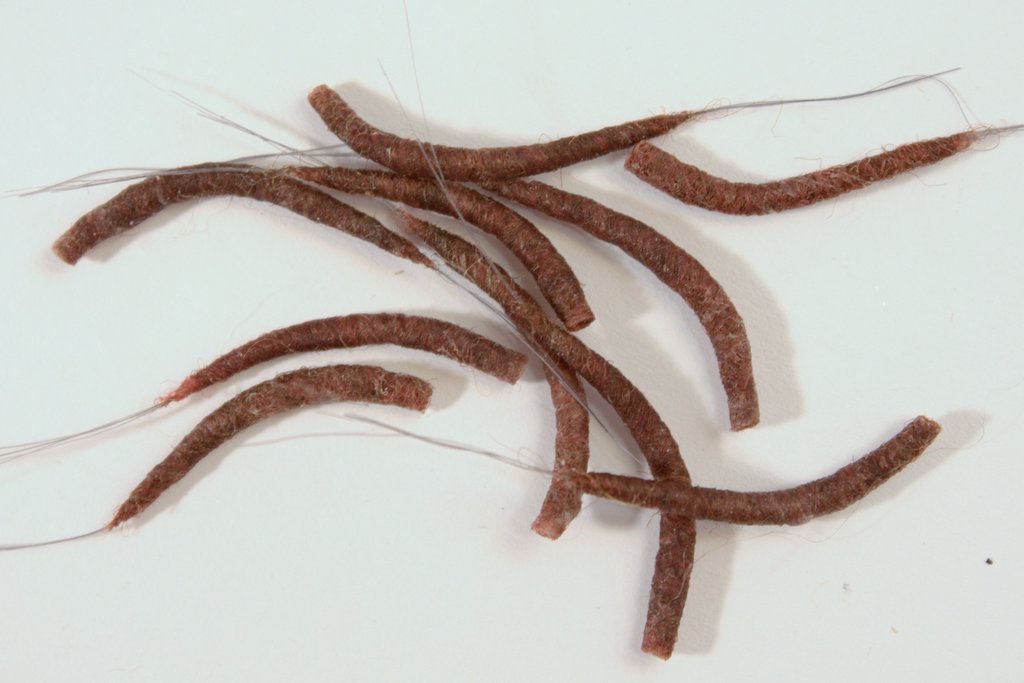
Hemingway's Mayfly Tube Bodies
Hemingway’s Mayfly Tube Bodies are an innovative tying material developed for fly tyers who want realistic mayfly dry patterns without unnecessary complexity. Made from high-quality dry fly dubbing, each body is pre-shaped into a hollow tube with integrated, extended tails, allowing you to create clean, accurate mayfly imitations quickly and consistently. These mayfly tube bodies allow fly tyers to achieve consistent shape, buoyancy, and realism with far less effort than traditional body materials.
The hollow construction traps small air pockets, acting as a built-in buoyancy aid that helps finished flies float naturally in the surface film. This added flotation reduces reliance on excessive hackle or floatant and results in a more balanced, realistic dry fly presentation.
The gently curved, tapered body profile closely matches the natural shape of real mayflies, giving your patterns the correct silhouette from all angles. Once tied, the body sits lightly on the water, imitating both freshly emerged and spent insects, depending on wing and hackle choice.
These tube bodies are soft, highly flexible, and easy to handle, making them suitable for both experienced fly tyers and those looking to streamline their dry fly tying. Because the bodies come pre-formed with tails, tying time is reduced significantly while maintaining a professional, consistent finish from fly to fly.
For added versatility, the bodies can be easily trimmed with scissors to the desired size and customized with permanent markers, allowing you to fine-tune size, coloration, segmentation, or shading to match local mayfly species and specific hatch conditions.
Available in multiple colors and three sizes, Hemingway’s Mayfly Tube Bodies cover a wide range of mayfly species and hook sizes, making them a reliable material for tying everything from small, delicate dries to larger, more robust mayfly patterns. They pair exceptionally well with Hemingway’s Mayfly Wings, resulting in clean, durable, and highly realistic dry flies built to perform on the water.
Sizes & Pack Information
- Small – approx. hook sizes #14–16 | 10 bodies per pack
- Medium – approx. hook sizes #12–14 | 10 bodies per pack
- Large – approx. hook sizes #10–12 | 5 bodies per pack
Available Colors
Yellow, Light Yellow, Cream Orange, Tan, Rzav River, Djetinja River
Tying Instructions
Hemingway’s Mayfly Tube Bodies are designed for quick, straightforward tying. Simply slide the body onto the hook, secure it in place, and build the rest of the fly as desired. See our Videos page for interesting pattern ideas, video fly tutorials, and recipes.
Fly tying video using this product
Semi-Realistic Mayfly
For a full list of materials needed for tying a Semi-Realistic Mayfly pattern, go here.
Fishing Mayfly Dun Patterns
Most mayfly species hatch in spring and early summer, but many also emerge at different times throughout the year. Certain species can produce sporadic hatches in late fall or early spring, and these off-peak events are often some of the most productive times for trout fishing.
During cooler periods in early spring and fall, mayfly hatches typically occur during the warmest part of the day, often around midday. In summer, hatches tend to shift toward the early morning or late afternoon and evening. As a general rule, the warmer the weather, the shorter the hatch window, sometimes lasting only an hour or two. In cooler conditions, hatches are sparse, but often extend longer and can provide sustained surface activity.
Mayfly duns float helplessly on the surface, often drifting downstream like tiny sailboats. This natural behavior dictates how dun imitations should be presented. A drag-free drift is critical, and flies should be presented from upstream, giving trout minimal opportunity to detect the leader or fly line.
One effective way to achieve this is with a pile, parachute, or cross-current reach cast, allowing the fly to drift naturally toward the fish before the line and leader follow. This presentation closely matches the way real duns move on the water and greatly increases the chances of a confident take.
To learn more about the mayfly life cycle and fly fishing techniques for different mayfly stages, click here.