


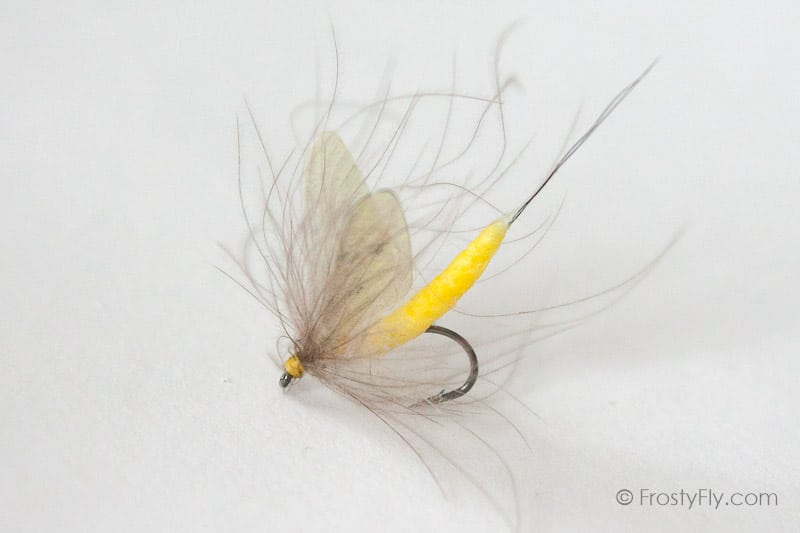
Hemingway's Realistic Mayfly Dry
Hemingway's realistic mayfly is an amazingly looking mayfly that imitates the real mayfly dun so well that the fish will not know the difference. This fly has the shape, the appearance, and the coloring of the real insect. These flies are premium quality - all hand-tied using high-quality Hemingway's realistic materials. The famous Hemingway's wings are transparent, lightly-colored, and feature the intricate detail that mimics the natural veins of the mayfly dun. As they are made of very flexible and soft material, they feel like the real thing and are easily gulped by the fish.
Bodies are hollow and light, featuring the characteristic curved and tapered shape of a mayfly dun and long, thin tails. The added feathering adds a final touch. These mayflies are made of floatable and light material that has just the right weight, so when they hit water, the way they float emulates the real insect accurately. The realistic look of these flies provides that imperative advantage when fishing this fly pattern. The material is super sturdy, these flies were tied to last, and will withstand many takes. Most importantly, Hemingway's Realistic Mayfly is highly effective; these flies will definitely produce some big strikes!
Choose from 5 colors: Light Yellow, Yellow, Tan (Natural), Dark & Mahogany, and 3 hook sizes: #12, #14, #16.
Tip: To avoid twisting of tippet when casting larger mayfly patterns, you can try to go with a bit heavier tippet than you would usually use. Also, shortening the tippet might help. In addition, you can use a micro swivel and connect it between your leader and tippet.
Fishing Mayfly Dun Patterns
The majority of mayfly species molt in the spring and early summer, while others do it at different times of the year. You could have sporadic hatches of certain species even in the late fall and early spring. These sporadic times could be even more interesting and productive for trout (and for a fisherman). During early spring and the fall, mayflies hatch in the warm hours of the day usually midday. In the summertime, this event moves more towards the morning and late afternoon or early evenings. Usually, the warmer the weather, the shorter the hatch is, an hour or two. With cooler weather, this can last a couple of hours. As mayfly duns float on the surface like little sailboats, this behavior dictates the method of presentation of the fly that is imitating them. When presenting a dun imitation to the trout, it has to be drag-free and from upstream, not giving the fish much opportunity to see the line or leader. This can be done by cross-current reach cast. This way, your fly will drift towards the trout before the line and the leader arrive.
To learn more about the mayfly life cycle and fly fishing techniques for different mayfly stages, go here.