


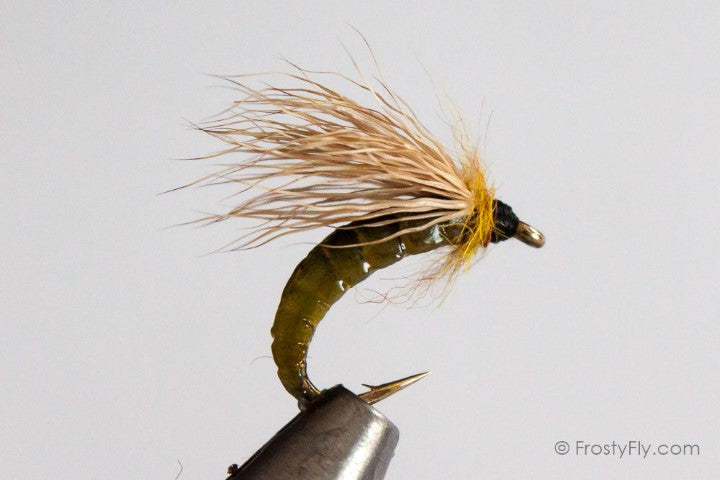
Realistic Caddis Pupa
Our Realistic Caddis Pupa is a great imitation of a real-life caddis in this stage. The fly has the characteristic caddis nymph segmented body shape, molded out of silicone material, and the authentic coloring, finished with a shiny, transparent coating. The added feathery hackle gives it the final touch - the signature, hatching caddis wingcase. The hackle also imitates the natural air bubbles that form during this stage. This fly pattern has been carefully designed and crafted to have the authentic look of a real insect. It is of the perfect weight, so the fly stays below the surface, in mid-water, emulating the natural insect's behavior in this stage, when it rises from the bottom to the surface during the hatching phase. The material is sturdy and made to last. As the pupal/emerging stage is when the caddisfly is most vulnerable, fishing a great caddis pupa pattern is definitely the most effective way to catch the trout during a caddisfly hatch. Our Realistic Caddis Pupa proved to be a great choice, even when trout are more selective. This is definitely a must-have pattern in every fly box; it will produce some explosive strikes!
Comes in most common caddis larva/pupa colors: Light Green, Green, Brown, and Smokey, and hook sizes #10, #12, #14, and #16. We also offer an amazing imitation of the caddis emerger stage - our Realistic Caddis Emerger, in the same range of colors and hook sizes. For fishing caddis nymph patterns, check out our Realistic Caddis Larvae, Weighted in sizes #14 and #16, and a variation with silicone legs in sizes #10 and #12.
Caddis Pupa Fly Fishing
Caddisflies are an aquatic insect that undergo a complete metamorphosis; they go from egg to larvae, then to the pupal stage, and finally emerge as an adult. Most species go through this full process over the span of one year. Out of all the stages, the larval stage is the longest, taking about a few weeks to a few months. Most caddisfly larvae are case-building, building the protective cases they live in, using the silk produced by their salivary glands. There are three major types of caddisfly larva, based on the way they use/make their casings: net-making, case-making, and free-living caddisfly larvae. Net-making caddis larvae usually live in running water, making their protective casings that act as protection but also as a means of collecting algae and plant food. Case-making larvae's casings consist of silk and bottom debris: small rocks, sand, and twigs. Free-living caddisfly larvae are more important to fly fishermen, as these species live unprotected for most of their lives and make casings just before going through the next life stage. Vulnerable like this, they are the most appealing food for trout. They live in running water, in riffles and defined currents. They cannot swim, but move around the river bottom using their front legs and posterior hooks.
When caddis larvae start hatching, this is when they become most vulnerable in their life-cycle. For trout, this is when it is easiest to grab them. In this stage, emerging caddis pupa start drifting as they make their way rising to the surface. During this time, they are going through the whole metamorphosis - their shuck splits open as they struggle to get out of it and emerge as adult, flying caddis. This is probably when they are most available and easiest for the trout to grab them, as they are higher in the water column, immobile, and helpless.
To fish a caddis pupa pattern, you can use a dead drift technique and present your fly lower, closer to the bottom, emulating a pupa that has just started to drift away. To emulate the emerging, rising pupa, present afly a little higher in the water column. Dead-drifting is mostly recommended, but an occasional swinging or twitching at the end of the drift will do a great job of imitating the fly at this phase of their hatch.