


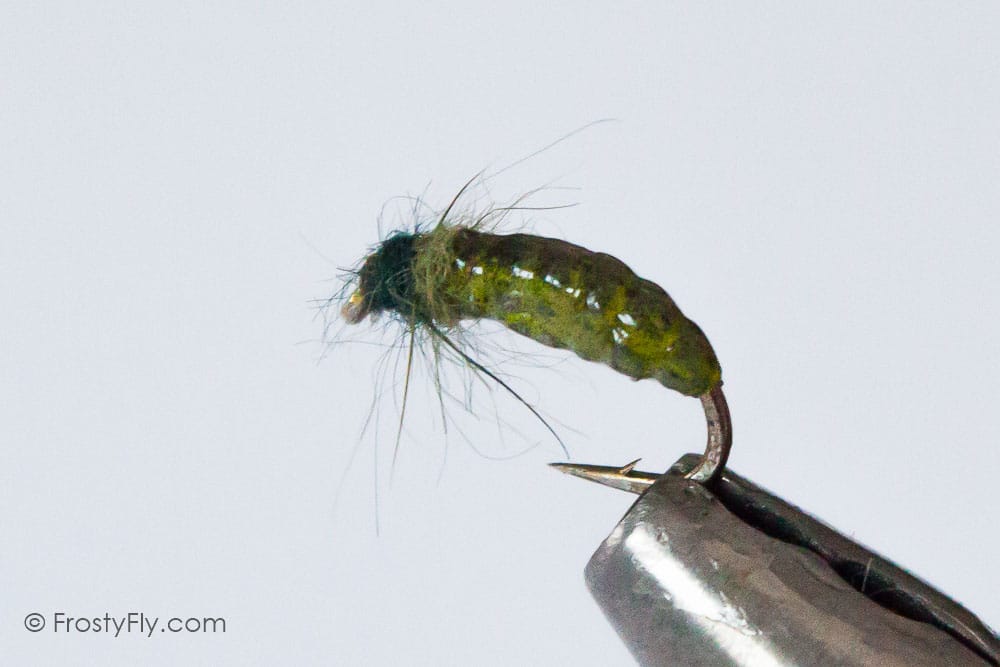
Realistic Caddis Larvae, Weighted
Our Realistic Caddis Larvae is a true representation of a real caddis nymph. It features the specific caddis nymph segmented body shape and the specific coloring, coated with a shiny, transparent coating. This fly pattern has been carefully designed and crafted to have the authentic look of a real insect. The pattern has been weighted so the fly falls to the bottom when in water, emulating the natural insect's behavior. The material is sturdy and made to last. This is definitely a must-have pattern in every fly box, especially when fishing fast, running water. It will produce some explosive strikes!
Comes in most common caddis nymph colors: Light Green, Green, Brown and Smokey, and hook sizes #14 and #16. For larger caddis nymph hook sizes, check out our Realistic Caddis Larvae, Weighted with Silicone Legs in sizes #10 and #12. We also offer an amazing imitation of the caddis pupal stage, our Realistic Caddis Pupa, as well as a caddisfly during emerging, Realistic Caddis Emerger, in the same range of colors and hook sizes.
Caddis Larva Fly Fishing
Caddisflies are an aquatic insect that undergo a complete metamorphosis; they go from egg to larvae, then to the pupal stage, and finally emerge as an adult. Most species go through this full process over the span of one year. Out of all the stages, the larval stage is the longest, taking about a few weeks to a few months. Most caddisfly larvae are case-building, building the protective cases they live in, using the silk produced by their salivary glands. There are three major types of caddisfly larvae, based on the way they use/make their casings: net-making, case-making, and free-living caddisfly larvae. Net-making caddis larvae usually live in running water, making their protective casings that act as protection but also as a means of collecting algae and plant food. Case-making larvae's casings consist of silk and bottom debris: small rocks, sand, and twigs. Free-living caddisfly larvae are more important to fly fishermen, as these species live unprotected for most of their lives and make casings just before going through the next life stage. Vulnerable like this, they are the most appealing food for trout. They live in running water, in riffles and defined currents. They cannot swim, but move around the river bottom using their front legs and posterior hooks.
Sizes range from a small #16 to a large size #8, but most commonly are #10, #12, or #14, tied on scud hooks. To fish this pattern, the best is to use the dead drift technique, presenting the fly along the bottom. Using the strike indicator will help as the takes can sometimes be difficult to detect.
WARNING: Handling this product may expose you to lead, a chemical known to cause cancer, birth defects, or other reproductive harm. Wash your hands after handling.