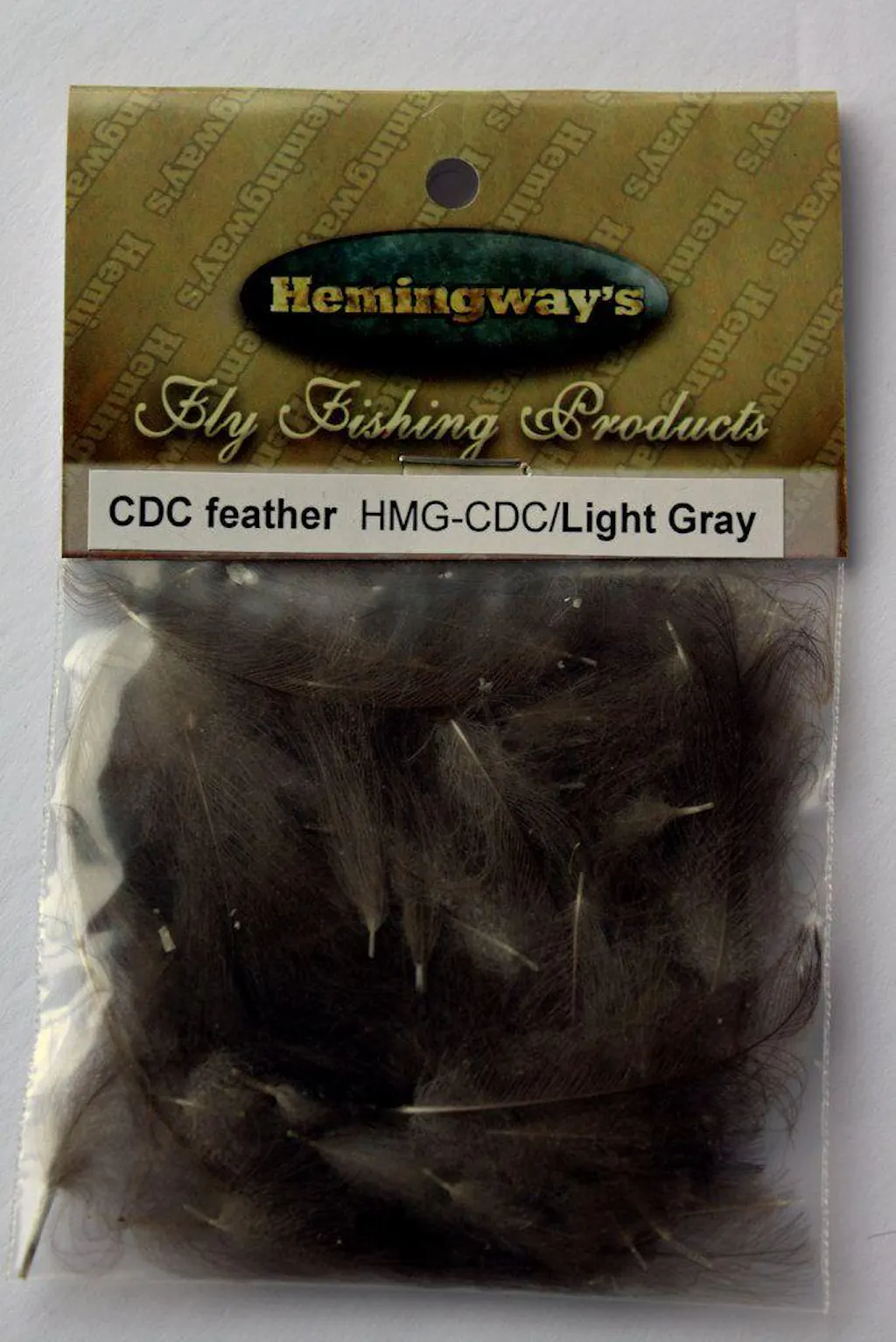
CDC Feathers
CDC Feathers (short for Cul de canard, French for "duck bottom") are one of the most favored materials when it comes to tying dry fly patterns. Naturally lightweight, strong, and waterproof, they are great at repelling water and possess great buoyancy. Two very important characteristics make them super-floatable: they repel water and they trap air. As these feathers come from the back of the duck, where the duck's preen gland is located, they are covered in natural oils. These oils prevent the feathers from getting saturated with water, thus making them weigh less and float well.
CDC feathers are tightly interlocked in a structure that holds air in. When a duck needs to dive underwater, it presses against its feathers, squeezing the air out. When it resurfaces, it shakes the water off and fluffs them up, which traps the air again. The structure of these feathers that traps air and the oil that prevents them from absorbing water, helps your fly afloat and above water.
CDC feathers are an incredibly buggy material, amazing for tying dry flies, but also emerge, nymph, and streamer patterns. The movement of the individual fibers in the water is very lifelike, drawing the attention of the trout and making them perfect for tying wings, soft hackles, and legs on nymph patterns, tails, posts, etc.
Some great fly tying recipes using CDC Feathers
Realistic Mayfly
[fl_builder_insert_layout slug="hemingways-realistic-mayfly-tying-steps-slider"]
For a full list of ingredients for the Realistic Mayfly pattern, go here.
Synthetic Quill CDC Emerger
For a full list of ingredients for the Synthetic Quill CDC Emerger pattern, go here.
Hemingways Caddis Flymph
For a full list of ingredients for the Hemingways Caddis Flymph pattern, go here.