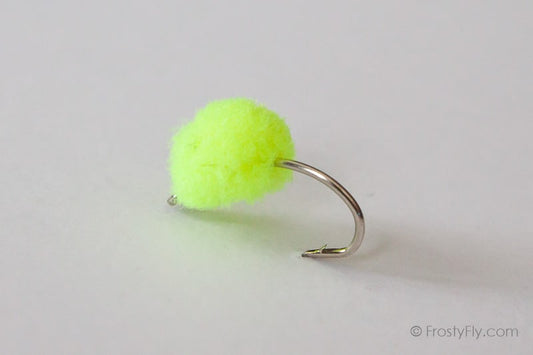
Egg and worm flies are some of the most effective patterns in fly fishing, delivering reliable results when conditions turn difficult or fish become less active. These high-visibility patterns imitate natural food sources like drifting eggs, aquatic worms, and other attractor-style prey that trout and steelhead feed on throughout the year.
Egg flies excel during spawning seasons, high-water periods, or anytime fish are keying on protein-rich drift. Worm patterns—whether classic San Juan worms, squirmies, or modern variations—offer lifelike movement and are especially effective in off-color water and fast currents.
Tied on strong hooks with durable materials, these flies hold up through repeated strikes and rough water. Whether you're targeting trout on creeks and rivers or chasing migratory steelhead in colder conditions, egg and worm flies are essential, confidence-building patterns that consistently put fish in the net.
Eggs & Worms – Frequently Asked Questions
Why are egg flies so effective?
Egg flies work because they imitate one of the most energy-efficient food sources trout, steelhead, and salmon encounter. Eggs drift naturally with the current. When fish key in on eggs, they often ignore other patterns, even when those flies are presented well.
When should I fish egg flies?
Egg flies are most effective during spawning periods, but they also work any time fish are feeding near the bottom or conserving energy. Cold water, pressured fisheries, and deeper runs are all situations where egg patterns consistently produce.
Do egg flies work when other flies don’t?
Yes. When trout or steelhead are focused on drifting eggs, traditional nymphs and attractor patterns can be ignored. In these situations, egg flies often continue to get eaten because they match both what fish are feeding on and how that food moves in the water.
Does color matter with egg flies?
Color matters once depth and drift are correct. Natural egg colors often work best in clear or pressured water, while brighter colors like pink and chartreuse can be more effective in stained water or low-visibility conditions.
How should I fish egg flies?
Egg flies are best fished using a dead-drift presentation. Cast upstream and allow the fly to drift naturally at the speed of the current. They work well under an indicator or as a part of a multi-fly rig.
What’s the difference between foam egg flies and weighted egg flies?
Foam egg flies offer a simple, classic presentation and are easy to fish in a variety of setups. Weighted egg flies help reach deeper feeding lanes more quickly and maintain a controlled drift in faster currents or deeper runs. Both have a place in an angler’s fly box, depending on water type and presentation needs.
Do egg flies look different when wet?
Yes. Egg flies are designed to look their best in the water, where they take on a softer, more natural appearance. This in-water look is far more important than how the fly appears when dry, as trout see the fly while it’s drifting underwater :)
Are egg flies only for trout?
No. Egg flies are extremely effective for many species, like salmon, bass, steelhead, and many more, especially in rivers where spawning activity is present.