Hemingway's Realistic Stonefly Wings
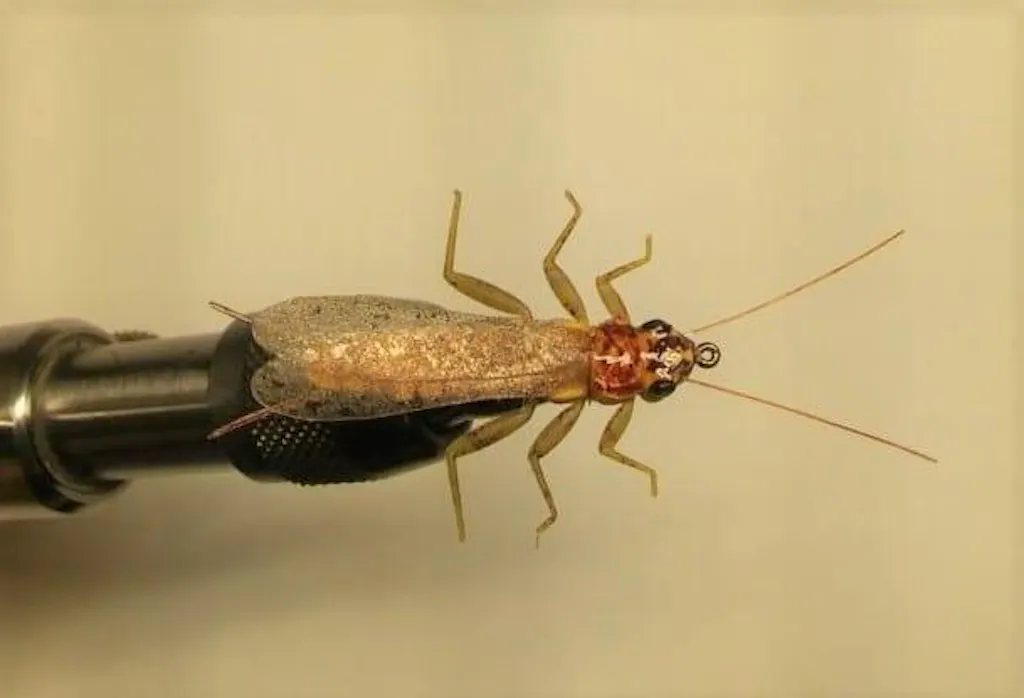
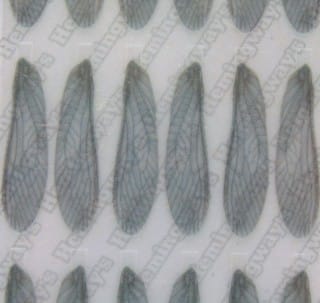
Hemingway’s Realistic Stonefly Wings are designed for tiers who want a realistic profile without spending extra time shaping materials at the vise. These wings come pre-cut and pre-shaped, so they’re ready to tie straight off the backing sheet.
The transparency, veining, and natural look closely match the wing of a real stonefly, helping create flies that sit and fish convincingly on the water. The material is soft and flexible, making it easy to work with while still holding up fish after fish.
They’re waterproof, UV resistant, and durable enough to fish confidently — not just admire in a fly box. Pair them with our Realistic Stonefly Bodies for an incredibly lifelike pattern that’s meant to be fished hard during stonefly season.
Available in four colors: Dark, Yellow, Tan & Gray, and the following sizes:
- Extra Small (18 pieces, 16 hook size) - 12 mm
- Small (18 pieces, 14-16 hook size) - 16 mm
- Medium (15 pieces, 12-14 hook size) - 20 mm
- Large (12 pieces, 8-10 hook size) - 25 mm
Please note that due to many different types and models of hooks, these hook size recommendations are just rough estimates. Besides stonefly wings, we also offer Hemingway's Realistic Wings for Caddis fly and Mayfly, also in a variety of colors and sizes. See them all here.
Tying Instructions
Simply tie the wings to the body hook using thread and secure in place, and build the rest of the fly as desired. See our Videos page for interesting pattern ideas, video fly tutorials, and recipes.
Some great fly tying recipes
Little Brown Hemingway Stonefly
For a listing of ingredients, go here.
Stimulator Fly
For a listing of ingredients, go here.
Stoneflies
Stonefly is an aquatic insect from the order Plecoptera. These are one of the oldest insect species, with over 3500 different varieties, and can be found around the globe, everywhere except Antarctica. They love clean environments, and their presence indicates very high water quality. Throughout their lifetime, stoneflies go through incomplete metamorphosis. They go from egg to nymph and straight to adult, without the pupal or dun stages. The complete stonefly life cycle lasts anywhere from one year (for smaller species, yellow sallies) to three years (larger kinds, salmonflies and large golden stones). Four major subspecies of stoneflies that are most significant for fly fishing are:
- Salmonfly, family Pteronarcyidae
- Large Golden Stone, family Perlidae
- Yellow Sally, family Perlodidae, subfamily Isoperlinae, genus Isoperla (Stripetail)
- Skwala, family Perlodidae (Springflies)
To learn more details about the stonefly life cycle, different stonefly species, their characteristics, times of hatching, tips on fishing for each species, and other great info, check out our blog post here.
Fly Fishing Stonefly Dry Patterns
There are two instances when adult stoneflies can become food for trout: near the water's edge, just after they emerge, and when they accidentally fall into the water. Secondly, and maybe most significant for a fly fisherman, is the moment of the egg-depositing, taking place on the riffles. When fishing the recently emerged adults along the riverbank, the best technique would be dead-drifting a float, tightly against the banks, beneath the overhanging branches. Should you notice that the trout is ignoring your fly, try the occasional twitch; it can entice a strike, as it could appear more natural to the trout underneath.
For fishing the riffles, when egg-depositing starts, usually in the evening, dead-drift is again the best presentation to utilize. However, to best imitate the natural behavior of the fly when they deposit eggs, an occasional hop or twitch could make a huge difference. Many stonefly females make a big splash when they hit the water, and some continue to flutter while depositing their valuable load. Successfully imitating this behavior can entice the fish and bring you that big strike. Cast the fly hard to make a splash and produce a commotion. Having your fly skate or skitter across the river's surface might do the trick.