


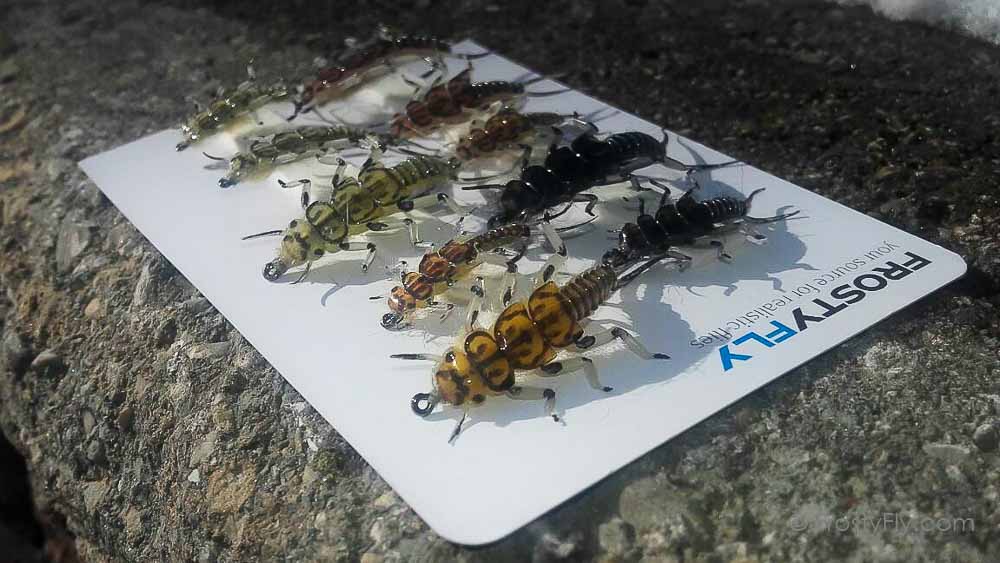
Hemingway's Realistic Stonefly Nymph Selection of 10 Assorted Flies
A selection of proven patterns, ready for the water. This set of 10 Hemingway’s Realistic Stonefly Nymphs brings together a range of sizes and colors, giving you flexibility to match different river conditions without overthinking it. These are well-known, trusted patterns designed to closely imitate natural stonefly nymphs — slim, segmented, and built to move naturally along the bottom.
These flies sink efficiently, track clean through faster water, and hold up through repeated fish. Not bulky, not stiff — just a realistic, consistent presentation that works when fish are feeding subsurface. If stoneflies are part of your river system, this is a practical way to have the right variation ready when it matters.
What’s Included
- 10 assorted Hemingway’s Realistic Stonefly Nymphs
- Selection of effective colors and sizes
- Designed to cover a range of conditions on the water
Stonefly Nymph Fishing
Stonefly nymphs live along the bottom, so the key is getting your fly down and keeping it there. Fish them deep, with regular bottom contact, especially in faster water where naturals get dislodged and tumble through the drift. Riffles, pocket water, seams, and the edges of heavier current are all prime water.
The main technique when stonefly nymph fishing is to try to imitate the natural behavioral drifting of real insects down the bottom of the stream and keep the fly at the trout's eye level. Drag-free, dead drifting along the bottom is the best option. Start with an upstream short cast to allow the fly to drop to the bottom, then dead drift down the current until it starts lifting up to the surface. Extending the drift downstream as long as possible would pay off. Using a strike indicator is recommended as it can greatly help in identifying the action.
To learn more about stoneflies, their lifecycle, how they look at each stage, and how to fish stonefly patterns, read our article Stonefly Life Cycle & Fly Fishing Stonefly Patterns.
Fishing Tips
- Fish it deep and close to the bottom
- Also effective under an indicator in deeper runs
- Focus on riffles, seams, and rocky sections