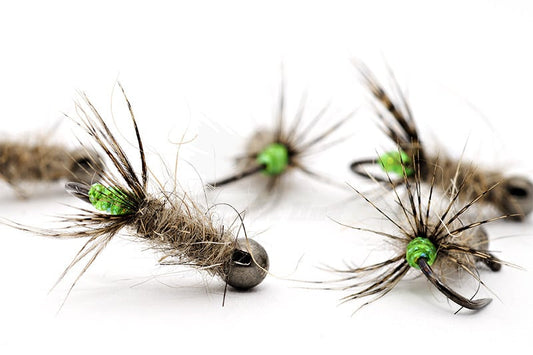
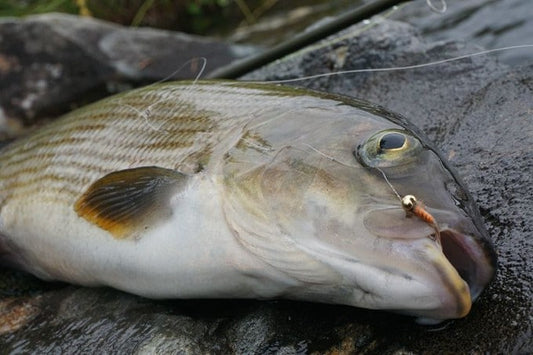
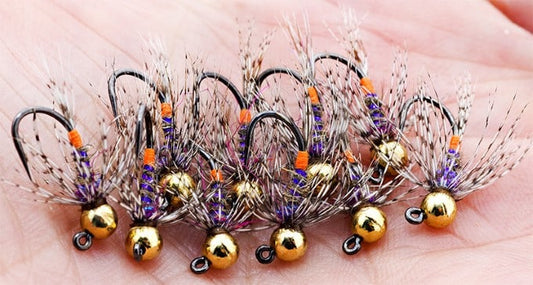
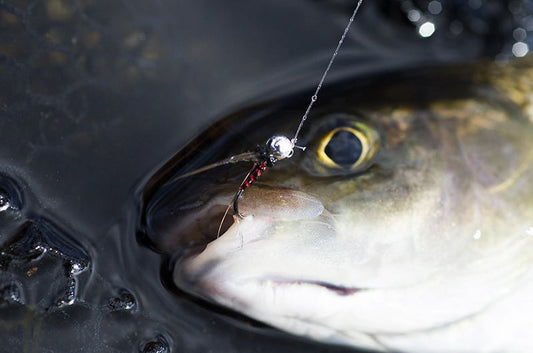
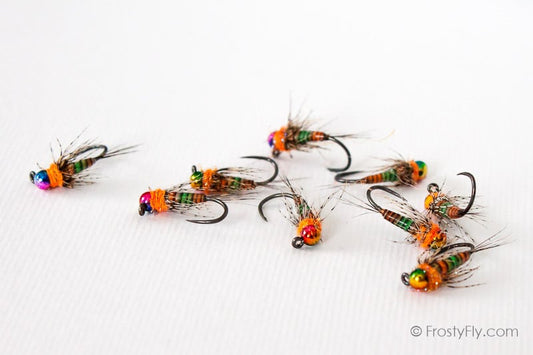
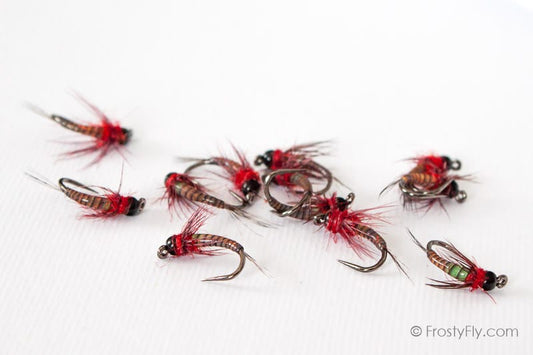
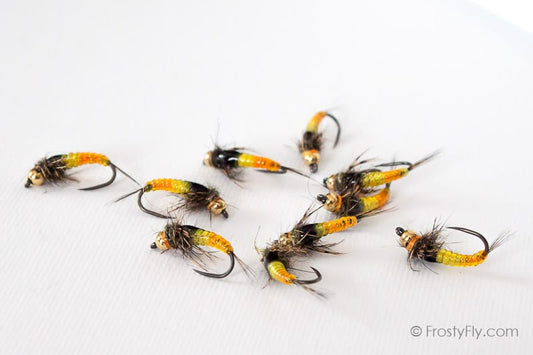
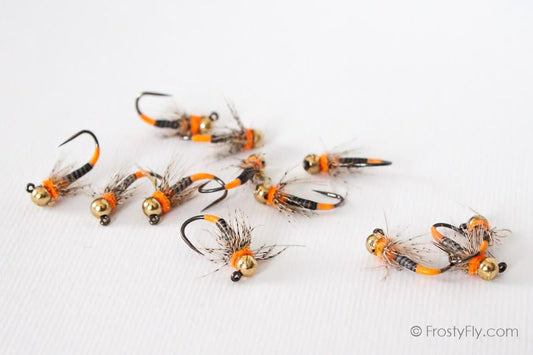
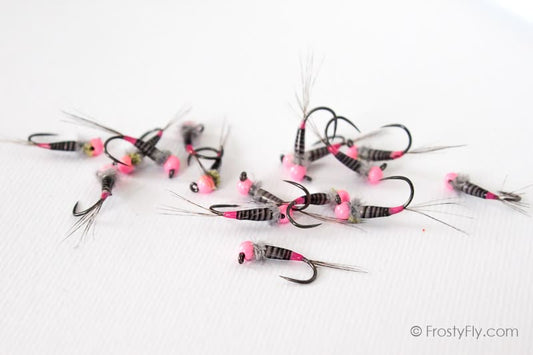
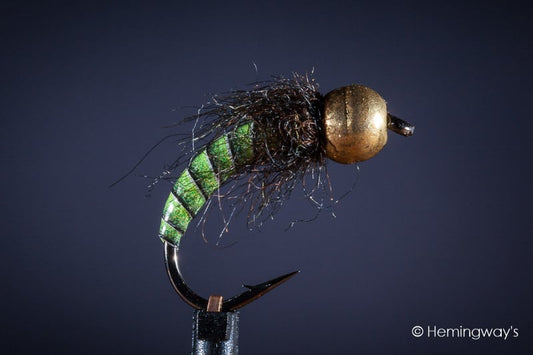
Euro nymphs are designed specifically for Euro Nymphing techniques—an umbrella term for several highly effective styles that originated in Europe and later spread into competitive fly fishing due to their precision and strike-detection ability. These methods include Czech Nymphing, Polish Nymphing, French Nymphing, and Spanish Nymphing, each with its own nuances but all sharing the same core principles:
- maintaining direct contact with the flies
- detecting even the slightest movement
- achieving natural drifts at depth
- using longer, highly sensitive rods
- fishing thin, fast-sinking nymphs weighted with tungsten beads
Because Euro nymphs are tied slim and heavy, they sink quickly and cut through turbulence, allowing anglers to reach the feeding zone efficiently.
Czech & Polish Nymphing
Czech and Polish styles are short-line nymphing techniques where the angler fishes almost directly beneath the rod tip. There is no floating fly line in the water—only the leader and flies. Two or three nymphs of varying weights are often used to control depth and drift.
This method requires long, sensitive fly rods (10–11 ft in 2–4 wt) and excels in fast, deep water where close-range accuracy and constant contact with the flies are essential.
Spanish (Dynamic) Nymphing
Spanish Nymphing, also known as dynamic nymphing, focuses on playing the fly to induce a strike. Flies used in this style often incorporate CDC, partridge, or other mobile materials that pulse naturally in the water.
Rods are typically 10–11 ft in 3–5 wt, often with medium or slow actions to maximize sensitivity.
French Nymphing
French Nymphing emphasizes long-leader presentations, often 3 to 4.5 meters in length and sometimes extending to 9 meters. This technique is highly effective in shallow, clear water where long-distance, delicate presentations are required. Anglers usually fish a single small nymph (#16–#20) on a long leader, making this one of the most technical and challenging Euro Nymphing styles to master. Recommended rods are 10–11 ft in 2–4 wt, designed for sensitivity and finesse.
The Common Thread
Despite their differences, all Euro Nymphing techniques share the same goals:
- Ultimate sensitivity
- Natural, drag-free drifts
- Fast depth penetration
- Minimal resistance
- Direct strike detection
Euro nymphs—thin, streamlined, and tungsten-weighted—are essential for achieving the level of control these methods demand.

 Sold out